
Wincle Grange Agroforestry Scheme
Case Study
The Project:
Agroforestry and habitat creation scheme integrating tree planting with productive farmland.
Location:
Wincle Grange, Peak District National Park, Cheshire East.
Objective:
To introduce large-scale tree planting while maintaining grazing, improving habitat connectivity and supporting long-term farm resilience.
Client:
Private Landowner
The background
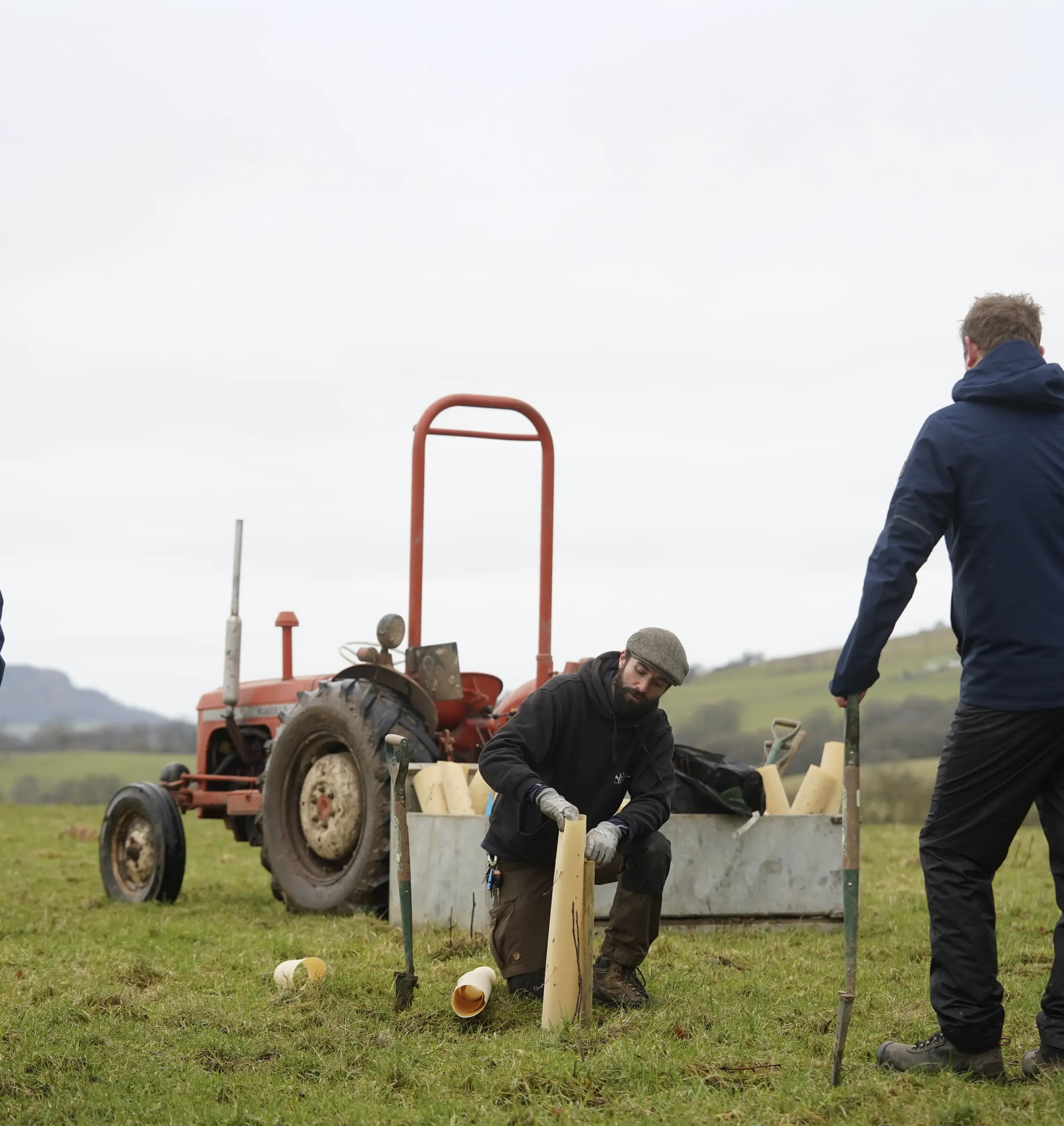
In winter 2023/24, Cheshire Wildlife Trust planted almost 12,000 trees and shrubs across 33 hectares of farmland at Wincle Grange in the Pennine Fringe, within the Peak District National Park. The project was funded through the Trees for Climate programme and delivered by CWT staff, volunteers, and corporate groups.
The site presented a clear challenge: the landowner needed to retain grazing across much of the farm, which ruled out conventional whole-field woodland planting. The solution was a detailed, farm-integrated design that introduced trees in multiple ways; agroforestry lines, wood pasture, shelterbelts, orchard planting, and high-density woodland blocks, with each serving a distinct purpose while working together across the landscape.
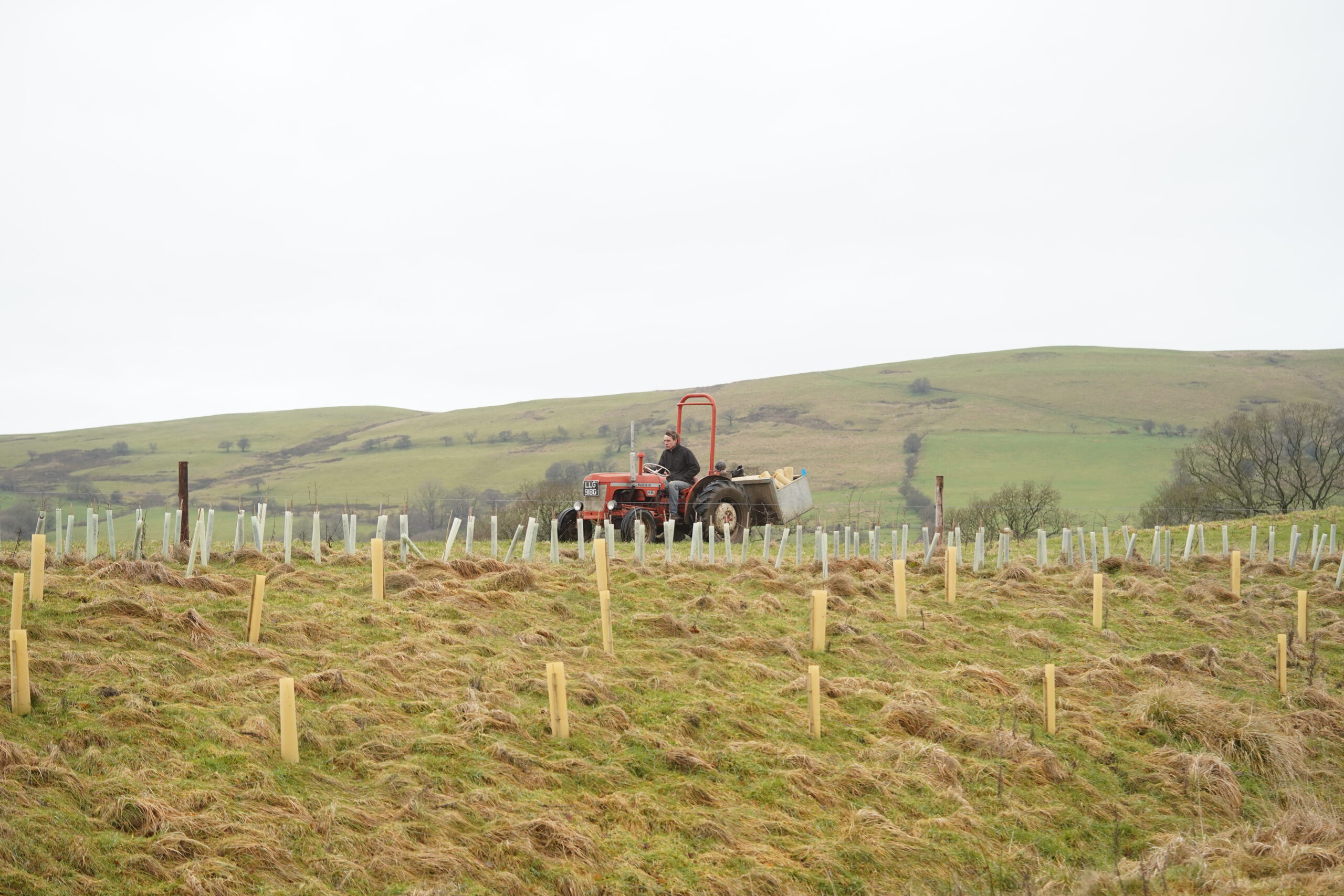
The largest element, covering over 22 hectares, was an agroforestry scheme using contour-planted tree lines spaced 30 metres apart, with fruit, nut and native hardwood species selected to produce a fodder crop for livestock alongside rotational coppice for firewood. This approach means the trees pay their way on the farm long before the wider woodland benefits come through. A 4-hectare wood pasture component accommodated the more challenging ground, with specimen oaks, walnut and sweet chestnut planted on a grid and protected by electric fencing and biodegradable shelters. A 3-hectare orchard, a shelterbelt, wet woodland, and a high-density block with retained rides and glades completed the scheme.
The value of this project lay in the thinking behind the design as much as the planting itself. CWT’s ecologists and land management team worked through the landowner’s objectives in detail, retaining productive grazing, generating farm income from the trees, improving habitat connectivity, and meeting the requirements of a National Park planning authority, producing a scheme that addressed all of them within a single coherent plan.
The Approach
The solution was a detailed, farm-integrated design that combined multiple planting approaches across the landscape, each with a specific function.
The scheme included:
- Agroforestry lines planted along contours
- Wood pasture on more challenging ground
- Shelterbelts to protect livestock and crops
- Orchard planting for long-term productivity
- Wet woodland and high-density woodland blocks
The largest element, covering over 22 hectares, was a contour-planted agroforestry system with tree lines spaced 30 metres apart. Species were selected to deliver both ecological and commercial value, including fruit, nut and native hardwood trees to provide fodder crops and rotational coppice for firewood.
This approach allows the trees to contribute to the farm economy while delivering wider environmental benefits over time.
The Outcome
The result is a site that demonstrates, in practical terms, how trees and farming can work together rather than compete. The diversity of species and planting styles built into the scheme gives it resilience against climate change, pests and disease, and the proximity of existing woodland means the new planting immediately strengthens habitat connectivity across the wider landscape.
Agroforestry FAQs
What is an agroforestry scheme?
Agroforestry is a land management approach that integrates trees with farming, allowing landowners to maintain productive agriculture while improving biodiversity, soil health and long-term resilience.
Can you plant trees on farmland without losing grazing land?
Yes. As demonstrated at Wincle Grange, trees can be integrated into farmland through approaches such as agroforestry, wood pasture and shelterbelts, allowing grazing to continue alongside habitat creation.
What are the benefits of agroforestry for farmers and landowners?
Agroforestry can provide multiple benefits, including improved soil health, increased biodiversity, natural shelter for livestock, additional income streams and greater resilience to climate change.
How much land is needed for an agroforestry project?
Agroforestry can be applied at a range of scales, from small areas to large estates. The design is tailored to the land, the farming system and the objectives of the landowner.
What funding is available for tree planting and land management projects?
Projects like Wincle Grange can be supported through funding schemes such as Trees for Climate, Countryside Stewardship and other environmental programmes, depending on the location and project type.
Looking for land management or agroforestry services in Cheshire?
We support landowners and organisations with habitat creation, tree planting and long-term environmental delivery.